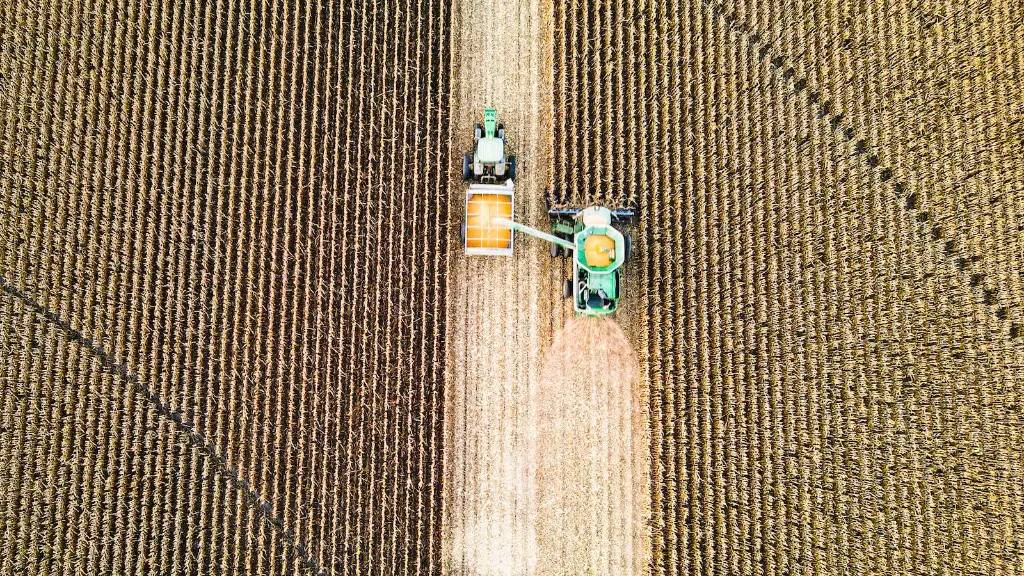
Is agriculture recession proof? This is a difficult question to answer definitively as the agricultural industry is complex and ever-changing. However, there are a few key factors that suggest that the agricultural industry may be more resilient to economic recessions than other sectors. First, the agricultural sector is heavily reliant on natural resources, which are not as susceptible to market fluctuations as other commodities. Additionally, the agricultural sector is often less labor-intensive than other industries, meaning that fewer jobs are lost during an economic downturn. Finally, many people continue to need food and other agricultural products even when their incomes are reduced, meaning that demand for these products is less likely to decrease during a recession. While no sector is immune to economic recessions, the agricultural industry may be better equipped to weather these challenges than some other industries.
No, agriculture is not recession proof. Agriculture is a cyclical industry that is vulnerable to changes in the economy. When the economy weakens, demand for agricultural products decreases and farmers’ incomes decline. However, some farmers are able to weather economic downturns better than others. Those who have diversified their operations and have a mix of crops and livestock are often better able to survive economic downturns.
Does agriculture do well in a recession?
The majority of studies about how agriculture responds to recession show that the part of agriculture that contributes to the economy does not drop as much as the rest of the economy during recession, staying relatively stable. This is likely because agriculture is a necessity, and people still need to eat even when the economy is struggling. farmers may produce less during a recession, but the demand for their products is still high, so they are less likely to be impacted as severely as other sectors.
There are a few industries that are relatively recession-proof and worth considering for your portfolio. Consumer staples, healthcare, utilities, and communication/digital services are all examples of industries that tend to do well even during economic downturns.
Of course, there are no guarantees in any investment, but these industries tend to be more stable and offer less risk than others. If you’re looking to diversify your portfolio or invest in something with less volatility, these are some good industries to research.
What sectors do well in a recession
There are a few sectors of the economy that tend to do better during a recession. These include health care, consumer staples, and communication services. This is because people still need these things even when the economy is not doing well.
Agricultural households in the United States are suffering from declining income from off-farm jobs as the country’s economic recession ripples through to rural-based businesses and loss of tax revenue puts pressure on rural government employment and social services. This is a serious problem for many rural families who rely on income from both farming and off-farm jobs to make ends meet. The recession is hitting rural areas hard, and the loss of income from off-farm jobs is compounding the problem. We need to find ways to help these families weather the storm and get back on their feet.
What sectors do poorly in a recession?
During an economic recession, industries that are most affected include retail, restaurants, travel/tourism, leisure/hospitality, service purveyors, real estate, and manufacturing/warehousing. These industries are typically sensitive to changes in consumer spending, which declines during a recession. Other industries may also be impacted by a recession, depending on the severity and length of the economic downturn.
A decline in disposable income affects prices, the prices of essentials, such as food and utilities, often stay the same. When people have less money to spend, demand falls, taking the prices of many goods and services with it. This can lead to a decrease in the standard of living for people who are on a fixed income or who live paycheck to paycheck.
Who will be hardest hit in the recession?
The industries that are most vulnerable during the next economic downturn include real estate, construction, manufacturing, retail, leisure and hospitality.
No matter how bad the economy gets, there are certain businesses that will always be in demand. Tax preparation, junk hauling, senior care, accountants, and funeral homes are just a few examples of businesses that provide essential services that people will always need. Even during an economic downturn, these businesses will continue to thrive.
What industries will thrive in 2023
These 8 industries are expected to experience significant growth in 2023:
1. Additive Manufacturing (3D Printing): Additive manufacturing is expected to continue to grow in popularity and applications, with new 3D printing technologies and materials being developed all the time.
2. Virtual Reality (VR): VR is expected to become more mainstream in the next few years, as more businesses adopt it for training, marketing, and other applications.
3. Ethanol Fuel Production: Ethanol fuel production is likely to increase in the next few years as the world looks for more renewable energy sources.
4. Electric Vehicles (EVs): EVs are expected to become more popular as battery technology improves and charging infrastructure expands.
5. Internet of Things (IoT): The IoT is expected to continue to grow in popularity and applications, as more and more devices are connected to the internet.
6. Bioengineering: Bioengineering is expected to grow in popularity as the world looks for more sustainable and environmentally friendly solutions.
7. Digital Twins: Digital twins are expected to become more widely used in the next few years as businesses look to improve their decision-making processes.
8. Wearables: Wearables are expected to
While many industries are affected by a recession, tourism and hospitality, entertainment, and construction are among the most vulnerable. This is because consumers change their spending habits when the economy contracts, and businesses in these industries are often the first to feel the effects. As a result, job losses in these industries are typically high during a recession.
What sells best in a recession?
There are some items that are always in demand and are not affected by recessions. These items are known as consumer staples. Some examples of consumer staples include coffee, tea, candy, cosmetics, and pet care products. Camping gear and automotive parts are also recession-proof.
The FMCG sector is one of the most defensive sectors in an economy and is relatively less cyclical in nature. This sector comprises of consumer products that have a quick shelf life and are generally low-priced. The basket of FMCG stocks usually comprises of daily use items such as soaps, detergents, toothpaste, shampoos, etc. which are necessities for most households. People might stop spending on discretionary items during tough economic times but they continue buying the FMCG products as they are required for their daily use. This sector is therefore less impacted by economic downturns and continues to grow at a relatively stable pace.
How many years of farming are left
Soil erosion is a huge problem and it’s only getting worse. If we don’t do something to stop it, we could run out of topsoil in just 60 years. That would be a disaster for agriculture and for the world. We need to act now to protect our soils.
This is a very difficult time for farmers. Interest rates are increasing, which means that their expenses are going up as well. This is a problem that we saw in the 1980s when there was a farm debt crisis. The Fed is taking steps to address inflation, but in the meantime, farmers are going to have to make some tough decisions.
Does a recession hurt farmers?
Farmers in seasonal agriculture are especially vulnerable to recessions because they rely on a steady supply of workers to plant and harvest their crops. If farmers can’t find workers when they need them, their crops may be ruined. This often leads to higher prices for food and other agricultural products.
1. Invest as much as you can in the stock market.
2. Protect your income by stabilizing your sources of income.
3. Cut back on your expenses.
Conclusion
No, agriculture is not recession proof.
agriculture is a sector that is always needed, no matter the state of the economy. The world will always need food, so there will always be a demand for agriculture. While the sector may see ups and downs, it is overall a stable industry that weathers economic storms better than most.